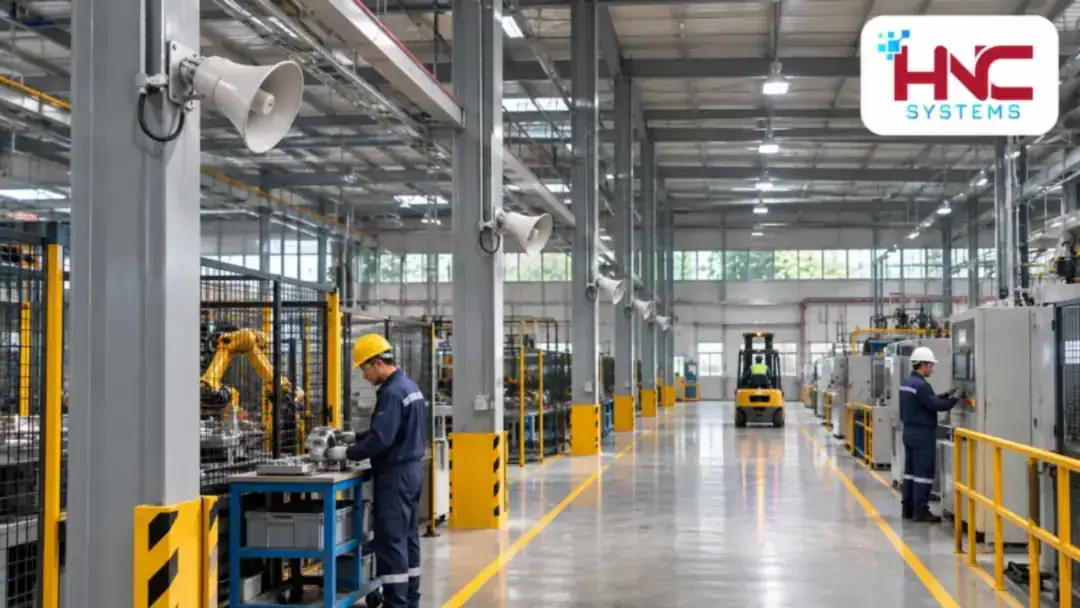



When selecting an ELV contractor in Ninh Binh, owners should clarify who is responsible for making the systems work together. A completed cable run may remain unusable without power, network addressing or suitable installation conditions. A request for quotation should therefore begin with operational needs and work boundaries, rather than a list of equipment alone.
Turn operational needs into a verifiable scope
For an office, factory or accommodation property in Ninh Binh, describe the users, service areas, operating hours and services that must remain available during maintenance. Identify new systems, retained components and areas where installation must proceed around occupants. Do not assume every building has identical requirements.
Include surveys, installation drawings, ancillary materials, configuration, testing, training and handover documents in the scope. For exclusions, name the receiving party and the required completion date. This allows quotations to be compared on equal terms and avoids a low price that leaves substantial work unassigned.
Create an interface and responsibility register
Every boundary between ELV, electrical power, interiors, doors, networks and building management needs an input provider, implementer, checker and approver. For example, an access-controlled door requires agreement with the door contractor on the lock type, power supply, status contact, exit arrangements and cable entry.
The register should record the signal or connector, technical requirements, deadline, drawing reference and acceptance criteria. Safety-related functions must follow approved designs and involve the responsible specialist. Do not independently change emergency-egress logic or interrupt systems serving occupants for a test.

Sequence work around readiness
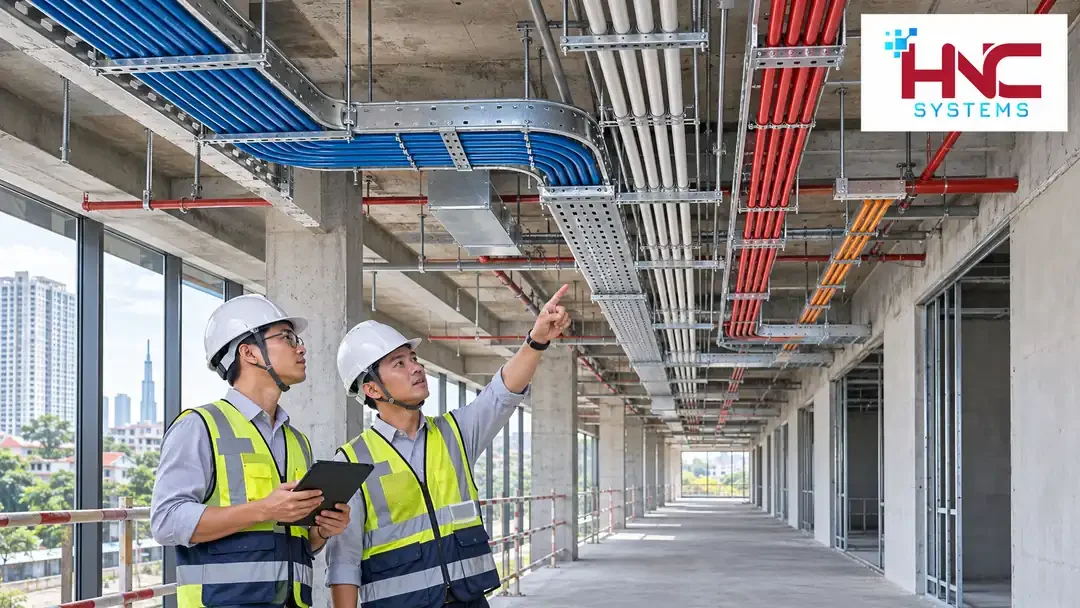
Before pulling cable, check conduits, trays, penetrations, supports, separation from other services and maintenance access against the design. Cabinet locations require appropriate power, earthing, ventilation and working space. Record unresolved prerequisites rather than concealing temporary fixes.
Use clear milestones: route approval, concealed-work inspection, cable pulling and labelling, link testing, equipment installation, configuration, standalone tests and integrated tests. Close ceilings only after the relevant parties approve the work requiring inspection. A floor-by-floor handover still needs clear operational boundaries and isolation arrangements for each floor.
Agree configuration rules and control changes
Agree device names, cable identifiers, cabinet ports, network zones, addressing and access rights before configuring equipment at scale. The owner should appoint an account administrator. Contractor access during support must be defined, rather than sharing one administrator account among all users.
Record the reason for each change in location, capacity or function, its effects on other parties, any cost implications and the approver. Update drawings alongside site changes. This helps operators find the correct device and prevents the installed configuration from drifting away from the documentation.
Test interfaces through scenarios, not indicator lights alone
Once individual systems pass their own checks, conduct joint tests with representatives of the affected parties. Each scenario should state the initial conditions, action, expected result, actual result and evidence. Examples include a valid credential, a revoked credential, a controlled simulation of lost connectivity and recovery as designed.
Tests that could disrupt operations require prior agreement on timing, scope and recovery arrangements. A screenshot is not evidence that the entire system works. Assign every defect an owner, completion date and retest. Record items that have not passed separately in the acceptance record.

Hand over a system the operating team can manage
The documentation should include as-built drawings, equipment lists, connection diagrams, cable schedules, test results, configuration backups, operating instructions and outstanding items. Transfer accounts and security information through appropriate channels, separately from widely distributed documentation.
Training should let operators practise routine tasks, review alerts, recognise faults and restore service within their authorised remit. Clarify warranty contacts, support conditions, backup responsibilities and work assigned to other suppliers. Response times are commitments only when both parties have agreed them in writing.
Prepare information before discussing the project with HNC Systems
To discuss an ELV contractor in Ninh Binh, prepare floor plans, existing-system information, the construction programme, integration needs and contacts for each discipline. Request a proposal that identifies scope, dependencies, acceptance milestones and handover documents. Cost and timing should be determined after a survey and agreement on scope.
Sample contact number: 0918.899.229. Verify contact details and service conditions before publication. This is advisory content prepared offline, not confirmation of any specific HNC Systems project, certification or service commitment.