



When upgrading loudspeakers in an operating factory, the question is not simply how many speakers are needed. The business must also know which area can be worked on first, how messages will be delivered during reconnection, and whether operators can select the right zone after changeover. Factory PA installation in Hai Phong should therefore proceed in steps that can be verified in each area, aligned with the actual production schedule.
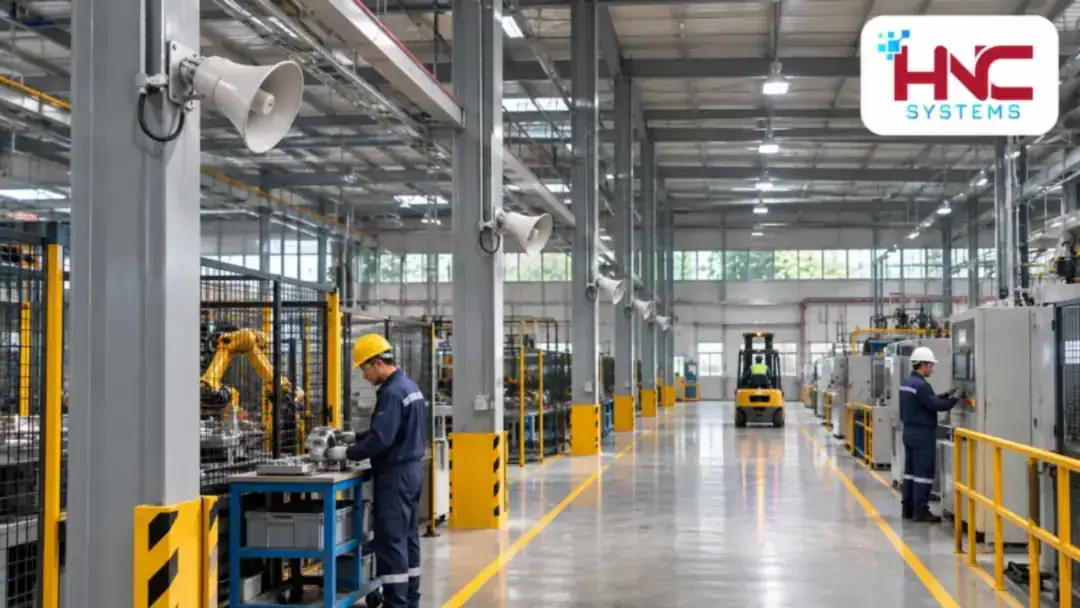
Map listening points before speaker circuits
Mark where workers need to receive announcements: machine workstations, packing benches, dispatch waiting areas and regularly used routes. Record the message type and who must respond at each point. A large area may require several speaker positions without requiring several paging buttons for the operator. Record meeting rooms and auxiliary office areas separately if they also need to receive announcements.

Illustrative photo · Shailesh Gajare · CC0 1.0 · resized, branded for presentation and converted to WebP
Choose speaker direction around obstacles and machinery noise
Survey while machinery and ventilation are in representative operating states. Record stored goods, partitions, open doors and noise sources that change with the process. Horn speakers should be aimed at the defined listening area; mounting higher or increasing power does not automatically make every position clearer.
Where hearing protection is mandatory, testers must continue to follow the site's protection requirements. A sound level meter helps document test conditions but does not by itself demonstrate speech understanding. Combine it with checks of what listeners understood, and agree a specialist assessment method if the project requires one.
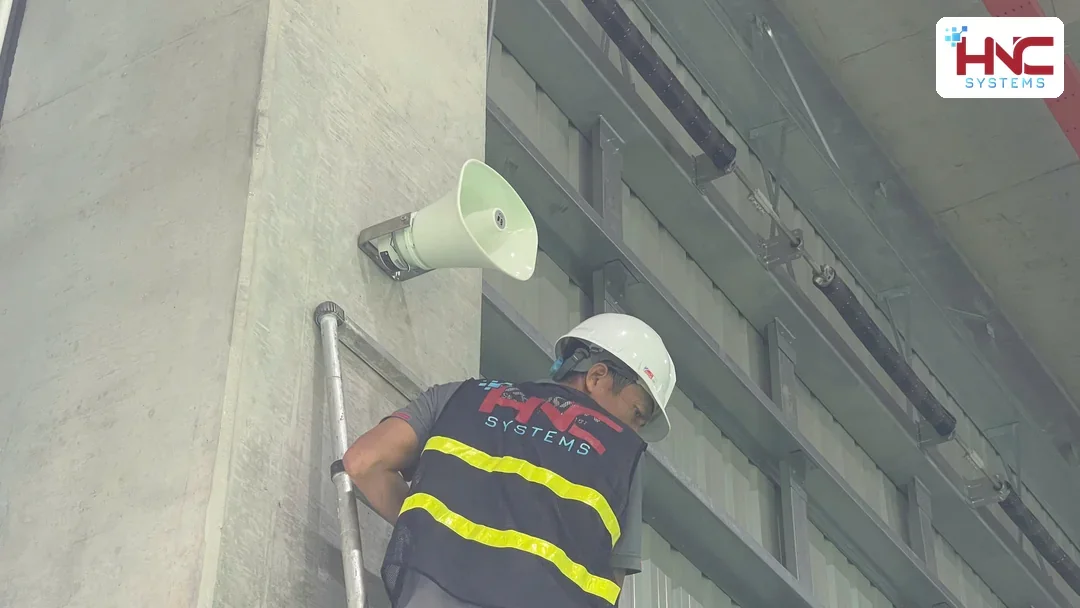
Make zone selection easy to verify
At the dispatch desk, use zone names familiar to staff. The guide should explain which zone to choose for common requests rather than merely list button numbers. Check the selected-zone indication, start and stop actions, and how previous selections are cleared before the next announcement.
Try an individual-zone message, a group message and an operator correcting a mistaken selection before speaking. Place listeners in both intended and excluded areas to compare results. If all-call paging is available, define who may use it and how accidental activation will be avoided in daily operation.
Agree scheduled announcements with production management
Separate recurring messages from live paging. Configure automatic schedules only after confirming the applicable shifts, receiving zones and authorized editors. Where teams take breaks at different times, avoid one common schedule that could mislead listeners. Verify scheduling functions on the proposed solution.
Change over one area at a time while retaining communication
Sequence installation around permitted access times. Before disconnecting existing circuits, confirm the affected scope, who authorizes the start and the temporary communication channel. Keeping the old system does not suffice if the circuit being modified also serves another area. Verify the actual arrangement before each changeover.
Put a new zone into service only after checking the circuit and listening at the selected points. If it does not pass, record which area still uses a temporary arrangement, who monitors it and when retesting is possible. Work at height, electrical work and work near machinery must follow the site's safety procedures, not be rushed simply to meet a test session.
Check clarity through what listeners can repeat
Use a test sentence with three parts: the department being called, where to go and what to do. Ask listeners to repeat the content, distinguishing hearing a sound from understanding the announcement correctly. Record results by listening point and shift conditions, including machinery, doors and obstacles, rather than stating generally that the whole factory can hear.
If a point fails, review speaker direction, position, reflections and the message before adjusting output level. After changes, retest both the failed point and adjacent areas to avoid creating excessively loud spots. Coordinate tests with production management; do not independently stop machinery or make continuous announcements that interfere with work.
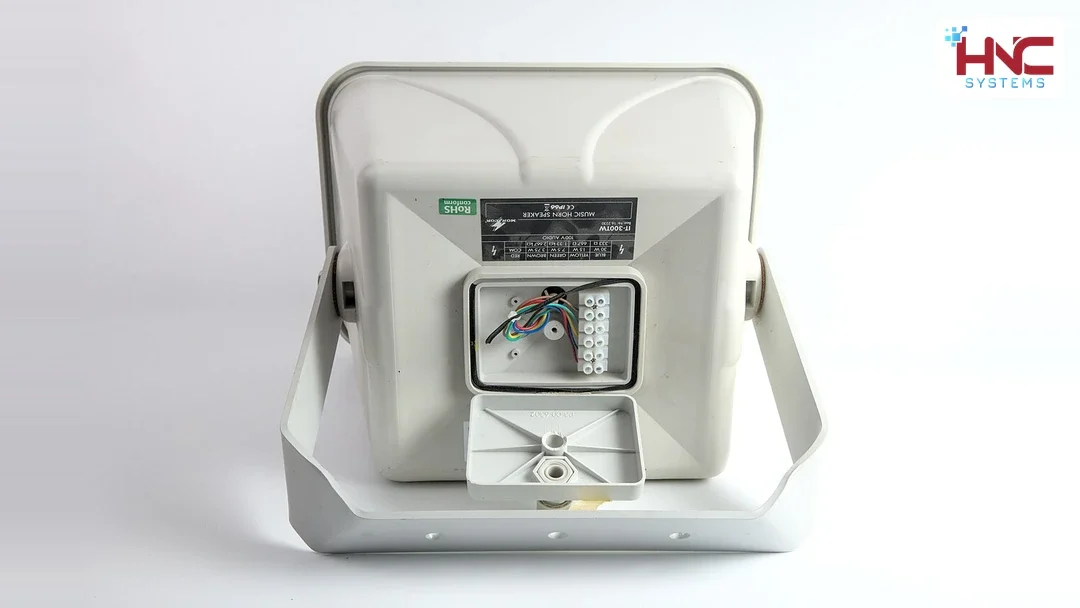
Illustrative photo · -stk · CC BY-SA 4.0 · resized, branded for presentation and converted to WebP
Hand over the rack and define the system's scope
Rack zone labels must match the paging desk and circuit diagram. Documentation should identify retained equipment, replacements, agreed settings and maintenance access points. Check loads, wiring, power and installation conditions against the design; do not connect old speakers merely because they still produce sound.
This scope concerns ordinary operational announcements. The system is not automatically certified for, or compliant with, fire alarm, evacuation or life-safety requirements. Any integration requires a separate design and testing scope agreed with the responsible party. Do not activate emergency signals during ordinary operational tests.
Prepare the brief for HNC Systems
For factory PA installation in Hai Phong, businesses should prepare a floor plan, shift schedule, existing equipment list and permitted work periods. Request separate proposal items for equipment, cabling, configuration, testing and operator guidance. Contact HNC Systems on 0918.899.229 to discuss a survey; configuration, cost, schedule and support terms require confirmation against actual conditions.