

With factory camera systems in Hung Yen, the challenge often lies in managing multiple areas with different operating rhythms. Gates require vehicle-movement checks, warehouses need handovers to be retrieved, and production areas need footage of specific process stages. Storage and retrieval should be designed around each task.
An easy-to-operate system should answer three questions: who is responsible for each area, how long data must be retained and how to find the correct event.
List zones and users
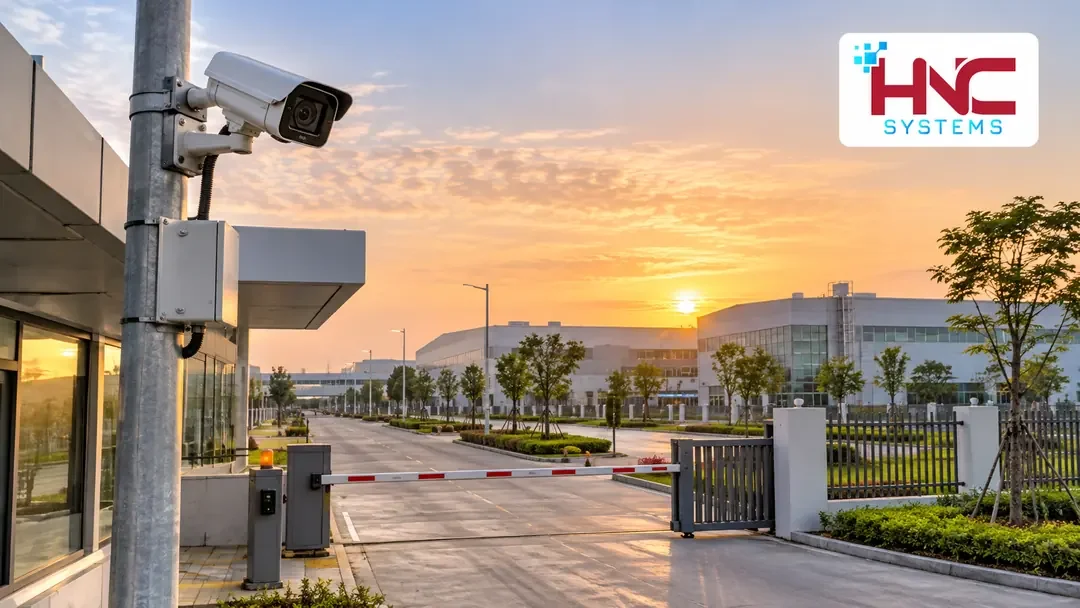
Gates and internal roads
Distinguish monitoring traffic flow from recognizing specific details. If number plates must be read, assess lanes, camera angles, motion and lighting separately. Do not assume a wide-angle gate camera can meet every requirement.
Warehouses and loading areas
Select checkpoints that need review, such as goods entering the counting area, being loaded onto a vehicle and the completion of a handover. Camera views should help reconstruct events between these points, avoiding gaps where packages pass without being visible to any camera.
Production and technical areas
In production areas, identify the process steps or events that need to be seen, rather than recording indiscriminately without a use plan. In equipment rooms, the objective may focus on entrances. Locations with special environmental conditions require separate assessment before equipment is selected.
Set retention periods around retrieval needs
Not every zone necessarily needs the same retention period. Review when requests for footage usually arise: within a shift, after handover or during completion of internal checks. Use this to agree on retention periods and the scope of footage to keep.
For factory camera systems in Hung Yen, storage capacity must be calculated from stream counts, recording schedules and actual settings. Scenes with considerable movement or image noise may produce varying bitrates. After operation begins, check the oldest recording still accessible rather than relying solely on the initial calculation.
Standardize video search and export procedures
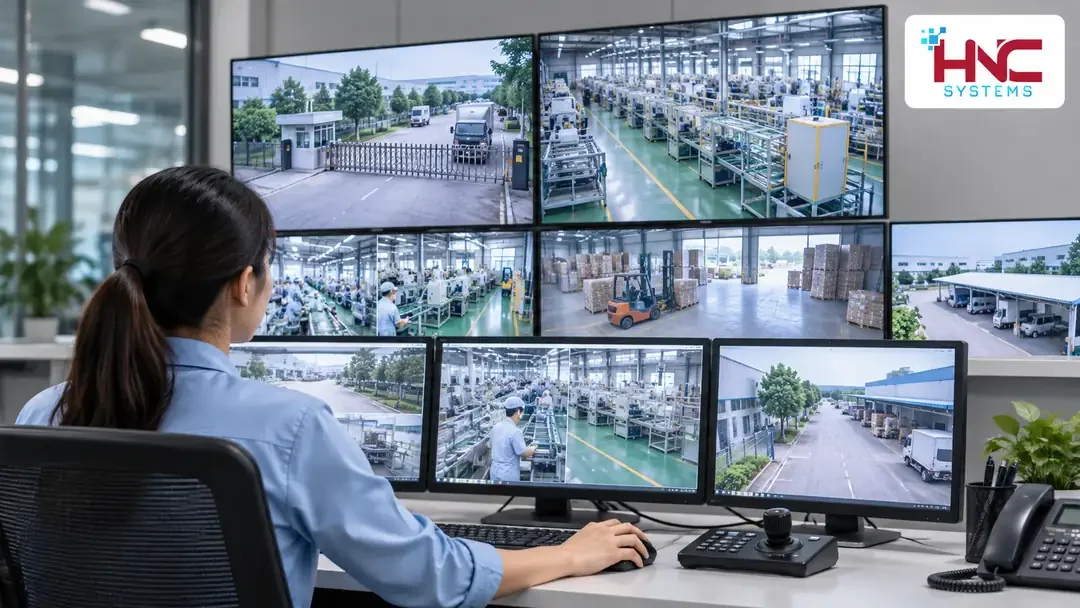
A retrieval request should include the area, time range and event description. If the only information is “a package is missing”, operators may have to review too much data. Delivery logs or shift-handover times can narrow the search when their use for that purpose is permitted.
Related cameras need consistent time settings. Once the required segment is found, check that it includes sufficient context before and after the event, export it and test playback. Distinguish footage still within automatic retention from clips exported to separate storage.
- Name cameras by zone, location and viewing direction.
- Define who may view, export and receive copies.
- Record the purpose and scope of each video handover according to internal procedures.
- Do not transfer data to unmanaged accounts or storage locations.
Include camera checks in shift handovers
Operators can quickly check priority zones, recording status and supported error notifications. A visible live image does not prove that recording is working correctly. Include a step to open recent recordings at the points defined in the procedure.
If a camera loses connectivity or storage reports an error, record when it was discovered, the affected area and the person assigned to handle it. Clear responsibilities prevent a fault from persisting across several shifts without follow-up.
Test scenarios involving multiple zones
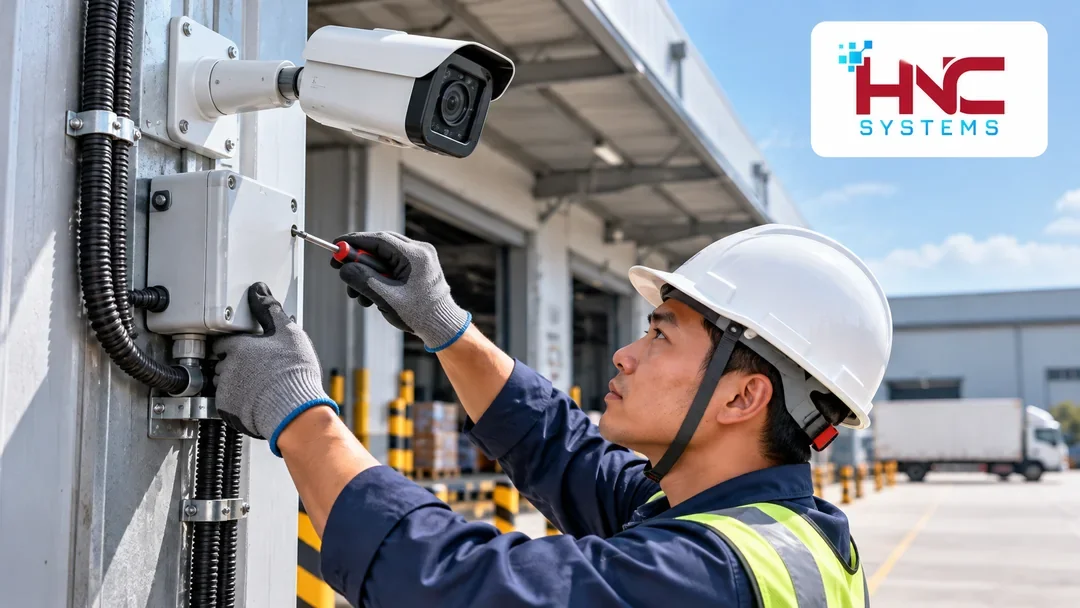
Acceptance testing should use a scenario that passes through several zones, such as a vehicle entering the gate, reaching the loading area and leaving the factory. Check that each checkpoint can be retrieved and times compared. Tests must remain within safe limits and avoid interrupting operations.
Also test representative numbers of viewers and video-export tasks. If operation must continue during power or network interruptions, agree on the scope and test the backup arrangement separately; do not infer whole-system resilience merely because one device has backup power.
Prepare a plan with HNC Systems
Before discussing the project, prepare a zone map, operating hours, desired retrieval periods and a user list. For existing systems, add common faults and the process stages that are currently difficult to review.
Businesses needing factory camera systems in Hung Yen can contact HNC Systems to discuss the survey scope. The plan should connect equipment, storage and operational responsibilities to each specific task.
HNC Systems · Hotline: 0918.899.229.